Author: MSc Marcin Goras – Master of Public Health, Specialization in Emergency Medical Services
Published: August 21, 2025
Last Updated: August 21, 2025
Reading Time: 10-12 minutes
What is Atrial Fibrillation?

Atrial fibrillation (AFib) represents the most common sustained heart rhythm disorder worldwide, affecting approximately 33.5 million people globally. Studies indicate that AFib affects 2.7 to 6.1 million Americans, with projections suggesting this number could reach 12.1 million by 2030 due to aging populations and improved detection methods.
In AFib, the heart’s upper chambers (atria) quiver chaotically instead of contracting in a coordinated manner, creating an irregularly irregular heartbeat. Research demonstrates that AFib prevalence increases dramatically with age, affecting less than 1% of people under 60 but rising to approximately 9% in those over 80.
How AFib Differs from Normal Heart Rhythm
In a healthy heart, the sinoatrial (SA) node generates regular electrical impulses that spread uniformly across both atria, causing synchronized contraction. The electrical signal then reaches the atrioventricular (AV) node, which delays transmission to allow complete ventricular filling.
In AFib, multiple chaotic electrical circuits circulate randomly throughout the atria instead of single, organized wavefronts. Studies show this creates several important consequences:
| Normal Sinus Rhythm | Atrial Fibrillation |
|---|---|
| Regular, predictable heart rate | Irregularly irregular heart rate |
| Effective atrial contraction | Loss of atrial contribution to filling |
| Optimal ventricular filling | Variable ventricular filling |
| Normal blood flow patterns | Increased risk of blood stasis and clots |
Clinical Significance
AFib carries significant health implications beyond immediate symptoms. Research consistently shows that AFib increases stroke risk by approximately five-fold, doubles heart failure risk, and is associated with increased mortality rates. The economic burden exceeds $6 billion annually in the United States alone.
Contemporary research reveals that AFib represents a progressive condition, typically beginning with brief, self-terminating episodes that may advance to persistent forms over time, reflecting underlying atrial remodeling processes.
Types of Atrial Fibrillation
Medical classification of AFib helps guide treatment decisions and prognosis. Understanding these categories enables better communication with healthcare providers about your specific condition.
Temporal Classifications
Paroxysmal Atrial Fibrillation involves episodes that terminate spontaneously within seven days, most commonly within 24 hours. Studies indicate that approximately 50% of patients with paroxysmal AFib progress to persistent forms within 5-10 years. Despite self-termination, these episodes carry similar stroke risk to persistent forms.
Persistent Atrial Fibrillation continues for more than seven days and typically requires medical intervention for termination. Research indicates this reflects more advanced electrical and structural atrial remodeling, making spontaneous conversion unlikely.
Long-standing Persistent AFib persists continuously for more than 12 months, with extensive atrial remodeling making rhythm restoration more challenging.
Permanent Atrial Fibrillation represents a clinical decision where rhythm control strategies have been abandoned, focusing treatment on rate control and stroke prevention.
Burden-Based Classifications
Recent research emphasizes AFib burden (percentage of time in AFib) as potentially more predictive of complications than traditional duration-based classifications. Studies suggest:
- High-Burden AFib (>20-30% of time): Associated with higher stroke risk and greater progression likelihood
- Low-Burden AFib (<10-20% of time): Still requires appropriate anticoagulation and monitoring
Silent AFib
Research demonstrates that 30-40% of AFib episodes may be completely asymptomatic, detected only through monitoring or screening. Silent AFib carries similar risks as symptomatic episodes, highlighting the importance of systematic screening in high-risk populations.
Symptoms and Warning Signs
AFib symptoms vary dramatically among patients, ranging from completely asymptomatic episodes to severely debilitating symptoms significantly impacting quality of life.
Common Symptoms
Palpitations affect approximately 70-80% of symptomatic patients. Research indicates patients typically describe an irregularly irregular rhythm that starts and stops unpredictably, unlike regular rapid rhythms of other arrhythmias. Common descriptions include:
- “Heart racing” or “fluttering”
- “Skipping beats” or “jumping around”
- Irregular, unpredictable heartbeat patterns
Chest Discomfort occurs in 40-60% of patients, manifesting as tightness, pressure, or pain. Studies indicate this results from increased oxygen demand during rapid rates, reduced cardiac output, or associated anxiety.
Shortness of Breath affects 60-70% of symptomatic patients, resulting from reduced cardiac output due to irregular filling, loss of atrial contribution, or heart failure development.
Fatigue and Exercise Intolerance represent among the most impactful symptoms, affecting 60-80% of patients. The irregular rhythm prevents normal heart rate response to exercise, leading to inadequate cardiac output during physical activity.
Neurological Symptoms
Dizziness and Lightheadedness affect 50-60% of patients, resulting from irregular cardiac output and rapid ventricular response causing reduced filling time.
Cognitive Symptoms include difficulty concentrating, memory problems, and mental fogginess. Emerging research suggests these may result from subclinical cerebral embolization or reduced cerebral perfusion.
When to Seek Medical Care
Patients should seek immediate medical attention for:
- Chest pain with palpitations
- Severe shortness of breath
- Fainting or near-fainting
- Episodes feeling significantly different from usual patterns
Causes and Risk Factors
AFib development results from complex interactions between structural heart disease, systemic conditions, genetic predisposition, and environmental factors.
Age and Cardiovascular Factors
Age represents the most powerful independent risk factor, with prevalence doubling approximately every decade after age 50. Age-related changes include progressive atrial fibrosis, altered calcium handling, and increased susceptibility to oxidative stress.
Hypertension increases AFib risk by 1.5-2 fold through chronic atrial pressure overload leading to enlargement and fibrosis. Research demonstrates effective blood pressure control can reduce AFib risk by 20-30%.
Heart Failure has a bidirectional relationship with AFib. Heart failure increases AFib risk through atrial pressure elevation and neurohormonal activation, while AFib can cause or worsen heart failure through loss of atrial contribution and irregular filling.
Coronary Artery Disease and Valvular Disease increase AFib susceptibility through various mechanisms including ischemia, dysfunction, and structural changes.
Systemic Conditions
| Condition | AFib Risk Increase | Key Mechanisms |
|---|---|---|
| Diabetes | 20-40% | Cardiomyopathy, autonomic neuropathy |
| Hyperthyroidism | 2-3 fold | Direct electrophysiologic effects |
| Sleep Apnea | 2-4 fold | Hypoxemia, sympathetic activation |
| Chronic Kidney Disease | Variable | Volume overload, electrolyte abnormalities |
Lifestyle Factors
Obesity demonstrates a graded relationship with AFib risk, with each BMI unit increase associated with 4-7% increased risk. Studies indicate weight loss of 10% or more may significantly reduce AFib recurrence.
Alcohol Consumption shows dose-dependent effects. Heavy consumption (>3-4 drinks daily) significantly increases risk, while each additional daily drink increases AFib risk by 8-12%.
Exercise has complex relationships. Moderate exercise generally reduces risk, while intense endurance training may paradoxically increase AFib risk in some athletes through atrial remodeling.
Genetic Factors
Family history increases individual risk by 40-85%, with genome-wide studies identifying multiple genetic variants associated with AFib susceptibility. However, individual variants typically confer modest risk increases.
Stroke Risk and Prevention
Stroke represents the most serious AFib complication, occurring five times more frequently than in people with normal rhythm. Understanding and preventing stroke risk represents the most critical aspect of AFib management.
Stroke Mechanisms
The chaotic atrial activity in AFib leads to blood stasis, particularly in the left atrial appendage where approximately 90% of AFib-related clots form. Research indicates several factors contribute:
- Hemodynamic Changes: Irregular cardiac output and altered flow patterns
- Atrial Remodeling: Progressive structural changes creating prothrombotic environment
- Inflammatory Mechanisms: Increased inflammatory markers affecting coagulation
Risk Stratification: CHA2DS2-VASc Score
The CHA2DS2-VASc score helps identify patients who benefit from anticoagulation:
| Risk Factor | Points |
|---|---|
| Congestive heart failure | 1 |
| Hypertension | 1 |
| Age ≥75 years | 2 |
| Diabetes | 1 |
| Stroke/TIA history | 2 |
| Vascular disease | 1 |
| Age 65-74 years | 1 |
| Sex category (female) | 1 |
Risk Interpretation:
- Score 0 (men) or 1 (women): Low risk, may not require anticoagulation
- Score ≥2: Moderate-high risk, anticoagulation typically recommended
Anticoagulation Options
Direct Oral Anticoagulants (DOACs) have revolutionized AFib treatment:
| DOAC | Dosing | Key Advantages |
|---|---|---|
| Dabigatran | Twice daily | Reversible agent available |
| Rivaroxaban | Once daily | Convenient dosing |
| Apixaban | Twice daily | Lowest bleeding rates in trials |
| Edoxaban | Once daily | Good safety profile |
Studies consistently show DOACs are at least as effective as warfarin with significantly lower intracranial hemorrhage rates (approximately 50% reduction).
Warfarin remains important for patients with mechanical valves, severe kidney disease, or cost considerations, requiring regular monitoring to maintain therapeutic range (INR 2.0-3.0).
Bleeding Risk Assessment
The HAS-BLED score assesses bleeding risk but shouldn’t automatically preclude anticoagulation. Instead, high scores should prompt efforts to reduce modifiable bleeding risk factors including blood pressure optimization, alcohol cessation, and careful medication management.
Diagnosis and Testing
Accurate AFib diagnosis requires capturing the arrhythmia during episodes, which may necessitate various monitoring strategies depending on symptom frequency.
Electrocardiography
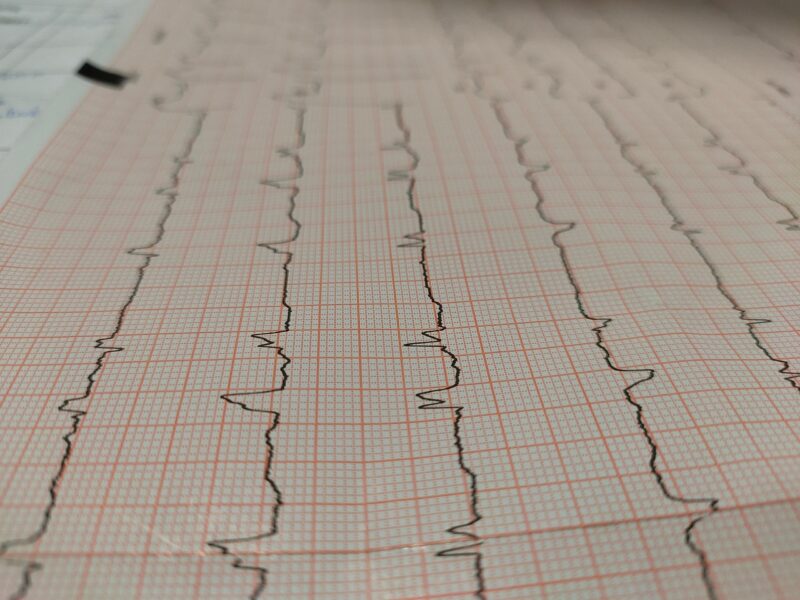
The standard 12-lead ECG remains the gold standard when obtained during AFib episodes, showing characteristic features:
- Absence of distinct P waves
- Irregularly irregular RR intervals
- Fibrillatory waves of varying amplitude
- Usually narrow QRS complexes
Ambulatory Monitoring
Holter Monitoring provides 24-48 hour continuous recording, detecting AFib in 5-15% of patients with suspected paroxysmal AFib.
Extended Monitoring using 14-30 day devices achieves higher diagnostic yields (15-30%) for infrequent symptoms.
Implantable Loop Recorders provide up to three years of monitoring with diagnostic yields exceeding 85% for appropriately selected patients.
Consumer Devices including smartphone and smartwatch ECG capabilities have revolutionized screening. The Apple Heart Study demonstrated feasibility of large-scale AFib detection using consumer technology.
Read more about abnormal EKG: https://healthonworld.com/cardiology/cardiac-diagnostic-tests/abnormal-ecg/
Additional Testing
Echocardiography should be performed in all AFib patients to assess cardiac structure, function, valve disease, and atrial size – all important for treatment planning.
Laboratory Testing should include thyroid function, kidney function, and electrolyte assessment to identify treatable underlying conditions.
Treatment Options
AFib management involves two primary strategies: rate control (accepting AFib while controlling heart rate) versus rhythm control (attempting to restore normal rhythm). Treatment selection depends on symptoms, AFib type, and individual patient factors.
Rate Control Strategy
Rate control accepts AFib presence while controlling ventricular response to minimize symptoms and prevent complications. Studies suggest lenient rate control (resting HR <110 bpm) may be sufficient for many patients.
Rate Control Medications:
| Medication Class | Advantages | Considerations |
|---|---|---|
| Beta-blockers | Excellent rate control, additional CV benefits | May worsen asthma/COPD |
| Calcium channel blockers | Good rate control | May cause hypotension |
| Digoxin | Useful in heart failure | Less effective during exercise |
Rhythm Control Strategy
Rhythm control aims to restore and maintain normal sinus rhythm. Recent research, including the EAST-AFNET 4 trial, suggests early rhythm control may improve cardiovascular outcomes.
Antiarrhythmic Medications require careful selection based on underlying heart disease:
- Class IC agents (flecainide, propafenone): Effective in structurally normal hearts
- Class III agents (sotalol, dofetilide, amiodarone): Can be used with structural heart disease
- Amiodarone: Most effective but limited by organ toxicity
Catheter Ablation
Ablation offers potential cure for AFib, with success rates of 60-80% for paroxysmal AFib and 50-70% for persistent AFib. The procedure involves electrical isolation of pulmonary veins, the most common AFib trigger source.
Patient Selection for ablation considers:
- Symptomatic AFib refractory to medications
- Patient preference for rhythm control
- Younger age and paroxysmal AFib (higher success rates)
- Normal left ventricular function
Techniques include radiofrequency ablation and cryoballoon ablation, both achieving similar long-term outcomes. Major complications occur in 1-3% of procedures when performed by experienced operators.
Comparative Outcomes
Large trials comparing rate versus rhythm control strategies:
- AFFIRM Trial: No survival advantage for rhythm control, though being in sinus rhythm was associated with improved survival
- CABANA Trial: Trends toward improved quality of life with ablation
- EAST-AFNET 4: Early rhythm control improved cardiovascular outcomes
Living with AFib
Successful AFib management requires developing effective strategies for daily life, medication adherence, and symptom management while maintaining quality of life.
Medication Management
Adherence Strategies include pill organizers, smartphone reminders, and regular provider communication about side effects. Anticoagulant adherence is particularly crucial, as interruptions increase stroke risk.
Side Effect Management through open communication with healthcare providers enables treatment modifications to optimize tolerability while maintaining benefits.
Activity and Exercise
Most AFib patients can maintain active lifestyles with appropriate modifications. Research demonstrates regular moderate exercise is beneficial and may reduce AFib burden. Exercise recommendations should be individualized based on symptoms and treatment response.
Symptom Recognition
Patients should understand when episodes require emergency care:
- Chest pain with palpitations
- Severe shortness of breath
- Loss of consciousness
- Episodes feeling significantly different from usual patterns
Monitoring Technology
Consumer heart rhythm devices enable episode documentation and provide valuable information to healthcare providers while offering patients greater confidence in condition management.
Prevention Strategies
While not all AFib can be prevented, substantial evidence supports lifestyle modifications for reducing AFib risk and improving outcomes.
Weight Management
Studies demonstrate weight loss of 10% or more provides clinically meaningful AFib reduction. The CARDIO-FIT study showed structured weight loss programs significantly reduced AFib burden and improved quality of life.
Blood Pressure Control
Effective hypertension management can reduce AFib risk by 20-30%. Lifestyle approaches including dietary modification (particularly DASH diet), exercise, and weight management significantly impact blood pressure.
Sleep Optimization
Sleep apnea affects 30-50% of AFib patients. Research indicates effective CPAP treatment can reduce AFib recurrence, particularly following cardioversion or ablation procedures.
Alcohol and Substance Moderation
Heavy alcohol consumption significantly increases AFib risk through multiple mechanisms. Moderation rather than complete avoidance is typically recommended, though individual tolerance varies significantly.
Stress Management
Psychological stress represents a commonly reported AFib trigger. Studies suggest stress reduction techniques including meditation, yoga, and regular exercise may help reduce episode frequency in stress-sensitive patients.
Frequently Asked Questions
Q: Is atrial fibrillation dangerous?
A: AFib itself is rarely immediately life-threatening, but it significantly increases stroke risk (five-fold increase). With appropriate treatment including anticoagulation, most patients live normal, active lives. The key is proper management addressing both symptoms and stroke prevention.
Q: Will I need blood thinners for life?
A: Anticoagulation decisions depend on stroke risk rather than current symptoms. Most patients with elevated risk (CHA2DS2-VASc ≥2 for men, ≥3 for women) benefit from long-term anticoagulation, even after successful procedures like ablation. Individual decisions require balancing stroke and bleeding risks with your healthcare provider.
Q: Can AFib be cured?
A: While AFib cannot be “cured” traditionally, catheter ablation can eliminate episodes in 60-80% of appropriate candidates, particularly those with paroxysmal AFib and normal heart structure. Many patients achieve excellent symptom control with medical management alone.
Q: Can I exercise with AFib?
A: Most patients with well-controlled AFib can participate in regular exercise with medical guidance. Studies show moderate exercise provides cardiovascular benefits and may reduce AFib episodes. Exercise recommendations should be individualized based on your specific condition and treatment response.
Q: Does stress cause AFib?
A: Research consistently demonstrates that stress can trigger AFib episodes through sympathetic nervous system activation. The relationship varies among individuals. Stress management is important but should not replace appropriate medical management including anticoagulation when indicated.
Q: What foods should I avoid?
A: Dramatic dietary restrictions are rarely necessary. Some patients benefit from alcohol moderation if it triggers episodes. Caffeine sensitivity varies significantly – moderate consumption is generally safe, though some individuals may need restrictions. Maintain consistent vitamin K intake if taking warfarin.
Q: How do I know if an episode requires emergency care?
A: Seek immediate care for chest pain with palpitations, severe shortness of breath, fainting, or episodes feeling significantly different from your usual pattern. Develop an individualized action plan with your healthcare provider specifying when to seek emergency care.
Q: Can AFib cause other heart problems?
A: Yes, particularly heart failure if rapid rates persist over time. Effective rate and rhythm control can prevent and sometimes reverse these changes. Regular follow-up enables monitoring for complications and treatment adjustments when necessary.
Medical Disclaimer: This guide is provided for educational purposes only and is not intended as a substitute for professional medical advice, diagnosis, or treatment. Always seek advice from qualified healthcare providers regarding any medical condition. Never disregard professional medical advice or delay seeking treatment because of information in this article. Individual cases vary significantly, and treatment approaches should always be personalized under professional medical supervision. If you have a medical emergency, contact your local emergency services immediately.
Sources and References
- Hindricks, G., Potpara, T., Dagres, N., et al. (2020). 2020 ESC Guidelines for the diagnosis and management of atrial fibrillation. European Heart Journal, 41(5), 373-498.
- January, C. T., Wann, L. S., Calkins, H., et al. (2019). 2019 AHA/ACC/HRS focused update of the 2014 guideline for the management of patients with atrial fibrillation. Journal of the American College of Cardiology, 74(1), 104-132.
- Kirchhof, P., Camm, A. J., Goette, A., et al. (2020). Early rhythm-control therapy in patients with atrial fibrillation. New England Journal of Medicine, 383(14), 1305-1316.
- Packer, D. L., Mark, D. B., Robb, R. A., et al. (2019). Effect of catheter ablation vs antiarrhythmic drug therapy on mortality, stroke, bleeding, and cardiac arrest among patients with atrial fibrillation: the CABANA randomized clinical trial. JAMA, 321(13), 1261-1274.
- Granger, C. B., Alexander, J. H., McMurray, J. J., et al. (2011). Apixaban versus warfarin in patients with atrial fibrillation. New England Journal of Medicine, 365(11), 981-992.
- Pathak, R. K., Middeldorp, M. E., Lau, D. H., et al. (2015). Aggressive risk factor reduction study for atrial fibrillation and implications for the outcome of ablation. Journal of the American College of Cardiology, 66(21), 2264-2274.
- Wyse, D. G., Waldo, A. L., DiMarco, J. P., et al. (2002). A comparison of rate control and rhythm control in patients with atrial fibrillation. New England Journal of Medicine, 347(23), 1825-1833.
- Sanna, T., Diener, H. C., Passman, R. S., et al. (2014). Cryptogenic stroke and underlying atrial fibrillation. New England Journal of Medicine, 370(26), 2478-2486.
- Perez, M. V., Mahaffey, K. W., Hedlin, H., et al. (2019). Large-scale assessment of a smartwatch to identify atrial fibrillation. New England Journal of Medicine, 381(20), 1909-1917.
- Lip, G. Y., Nieuwlaat, R., Pisters, R., et al. (2010). Refining clinical risk stratification for predicting stroke and thromboembolism in atrial fibrillation. Chest, 137(2), 263-272
Read more…
American Heart Association (AHA)
- https://www.heart.org/en/health-topics/arrhythmia/about-arrhythmia/what-is-atrial-fibrillation-afib-or-af
- https://www.heart.org/en/health-topics/arrhythmia/prevention–treatment-of-arrhythmia/treatment-of-atrial-fibrillation
Heart Rhythm Society (HRS)
- https://www.hrsonline.org/patient-resources/heart-rhythm-disorders/atrial-fibrillation
- https://www.uptobeat.org/heart-rhythm-disorders/atrial-fibrillation
American College of Cardiology (ACC)